On my recent trip to Norway, I visited two stave churches around the country. We visited the Borgund Stave Church and the Gol Stave Church. I was so grateful to have this experience as stave churches are few and far between in Norway nowadays. The stave churches may look small from far away, but as you approach them, you immediately notice the high ceilings, intricate carvings, and the subtle smell of old tar-treated wood.
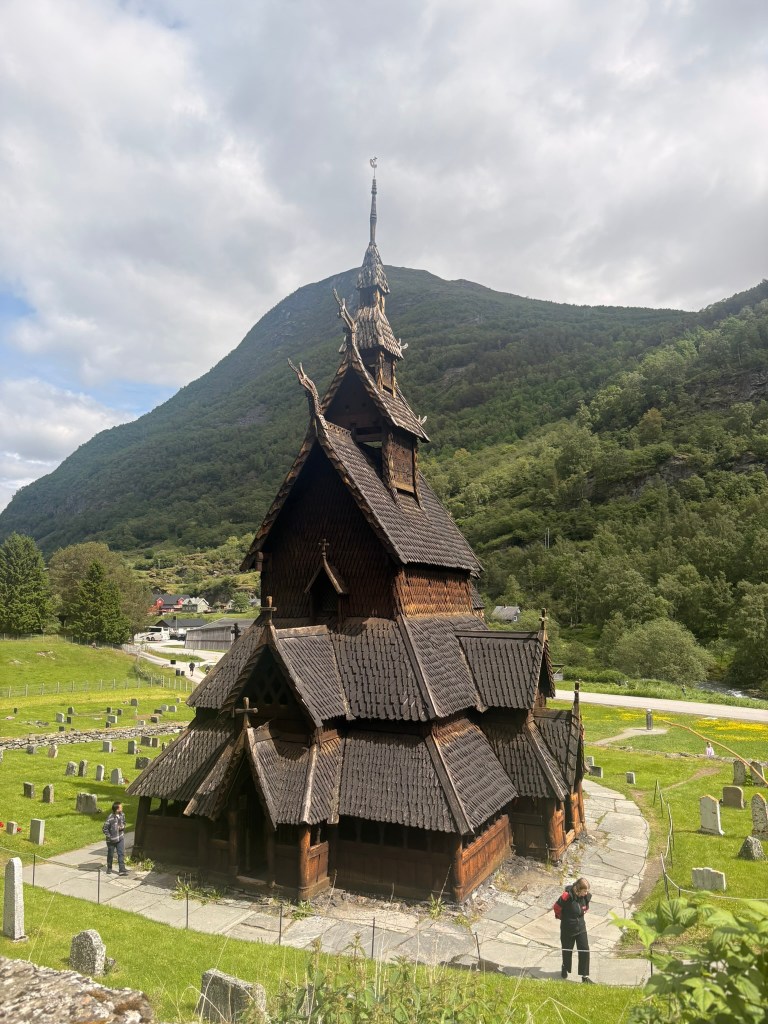
A stave church is a wooden medieval church that was built almost entirely from pine. It is held up by structural “staves,” that are large wooden posts that form the foundation of the church. These were built over roughly two centuries from the early 1100s until the Black Death hit Norway in 1349. These churches served as local Christian places of worship as the region transitioned from paganism to Christianity. They utilized the abundance of local timber and the advanced knowledge of the Vikings in regards to woodworking techniques to create these gorgeous churches around the country.
As many as 2,000 churches may have been built across the country before the Reformation. However, only 28 churches have survived. The remaining ones have been altered or extended over the years, so many of them barely look like their original selves anymore.
The churches fell for a variety of reasons. In Norway, there were some legal modernization acts in the 19th century including the Church Act of 1851 and the Church and Church Building Law of 1827. These acts were passed in response to the growing population. The government decided it was necessary to require replacing the medieval structures with brighter, larger spaces that could seat more of the population. Other churches disappeared due to structural decay, fires, and the changing community needs.
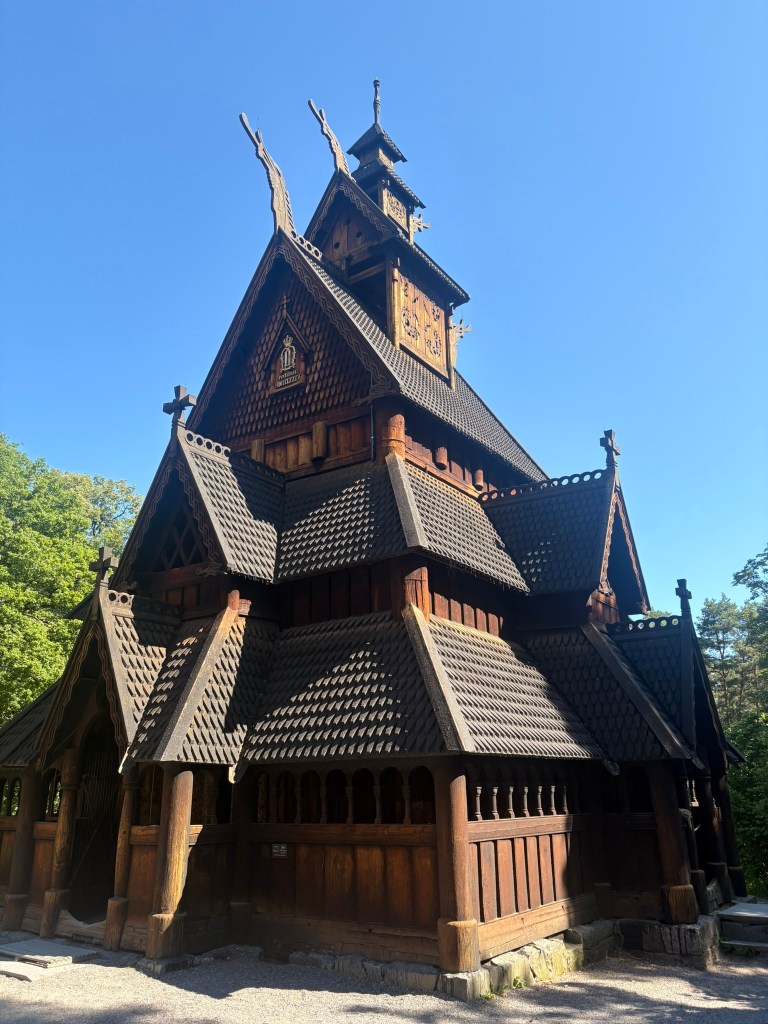
Stave churches were built entirely with axes because saws didn’t even exist in Norway until 1550, centuries after most of these structures were already standing. Builders used resinous pine, then coated the timber in tar to seal it against Norway’s relentless rain and snow. The whole structure sat on a stone foundation, keeping the wood from ever touching the soil. This small design choice that likely saved these buildings from rotting away centuries before anyone thought to protect them as heritage. If you look closely at the exterior of many stave churches, you will find carvings that have nothing to do with Christianity at all. Carvings include dragons, serpents, interlacing patterns that echo Viking ship prows. These designs are a strange collision with churches built in the name of a new religion, decorated with the visual language of the one it was replacing.
Geography did as much to save these churches as craftsmanship did. Most of the 28 survivors aren’t in Norway’s cities or fertile lowlands; instead, they are tucked into remote valleys and fjord country. These locations were often too poor or too isolated to ever justify tearing down the old church and building something newer. In the wealthier, more populated regions, stone churches replaced their wooden predecessors over the centuries, and the stave churches there simply vanished. In other words, these churches didn’t survive despite being forgotten, they survived because of it.


Leave a Reply