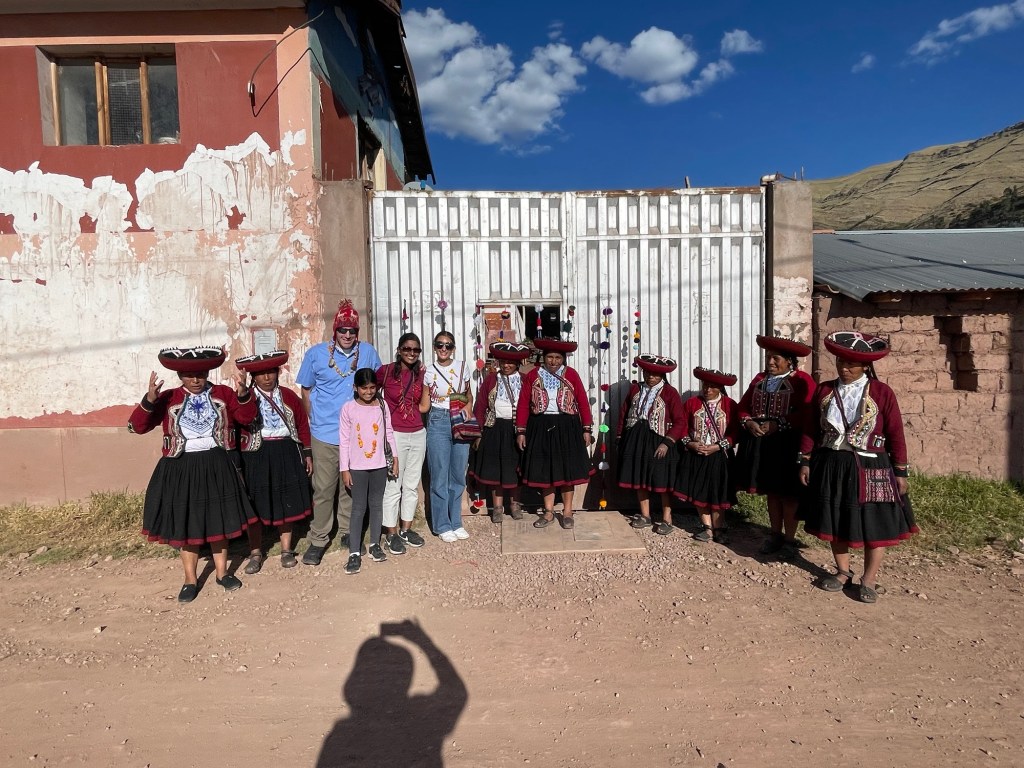
Deep in the Sacred Valley, far from the main road, there is a community of weavers willing to open their hearts and homes to any tourist wanting to learn more about the traditional weaving process in Peru.
This community explained to us step by step how they take alpaca fur and transform it into beautiful, hand-made pieces. The technique is passed from generation to generation, with each teaching their Nietas.

Step One : Shaving the Alpaca
Many families in Peru own many alpacas because they are considered one of the most important animals in this culture. They are dressed up for special occasions, transport materials, provide a soft thread to weavers, and are used for their meat, as alpaca is a popular dish in Peru.
Alpacas are sheared about once a year, but it does not hurt them. Their first two cuts are classified as baby alpaca and are considered the most valuable and soft. The alpacas are no strangers to dirt, so this fur is cleaned in a soapy hot water bath. The weavers have a specific plant that acts as a natural soap to clean the fleece. It takes about two minutes, and then the fleece is bright white.
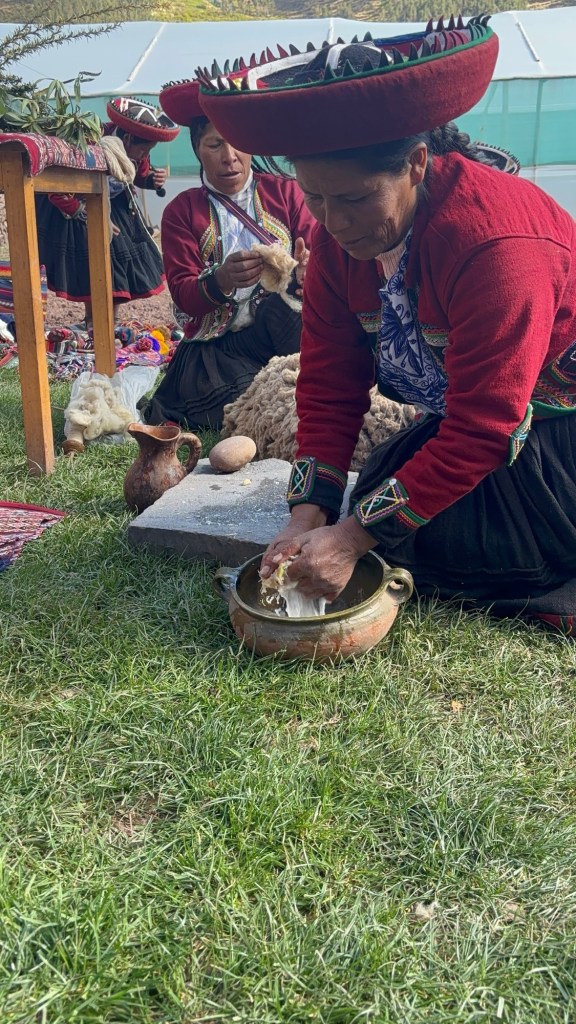
Step Two : Creating String
Once the fur is dry, the weavers use a pusca, a traditional tool that helps them spin the alpaca fleece into yarn. They lightly pull at the alpaca fur to get a small piece, feeding it onto the pusca as it rotates to create a thread for them to use. It is okay if the piece of yarn gets disconnected from the other long piece of string. They section off another small piece of the yarn and start again.
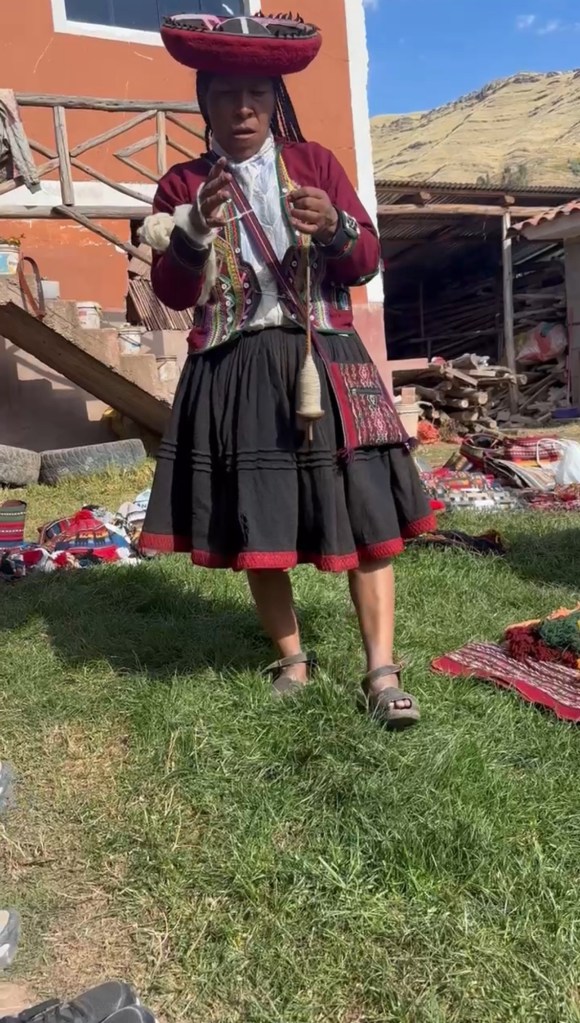
Step Three : Dying the Yarn
As it has been for countless decades and generations, these weavers use natural resources to dye their yarn. Each color comes from a different plant or root. For example, a red berry is crushed to produce a red dye. When placed in hot steaming water with the crushed berries, the white spool of yarn turns a deep red. Incredibly, the weavers use the flora and fauna around them to create these vibrant colors.
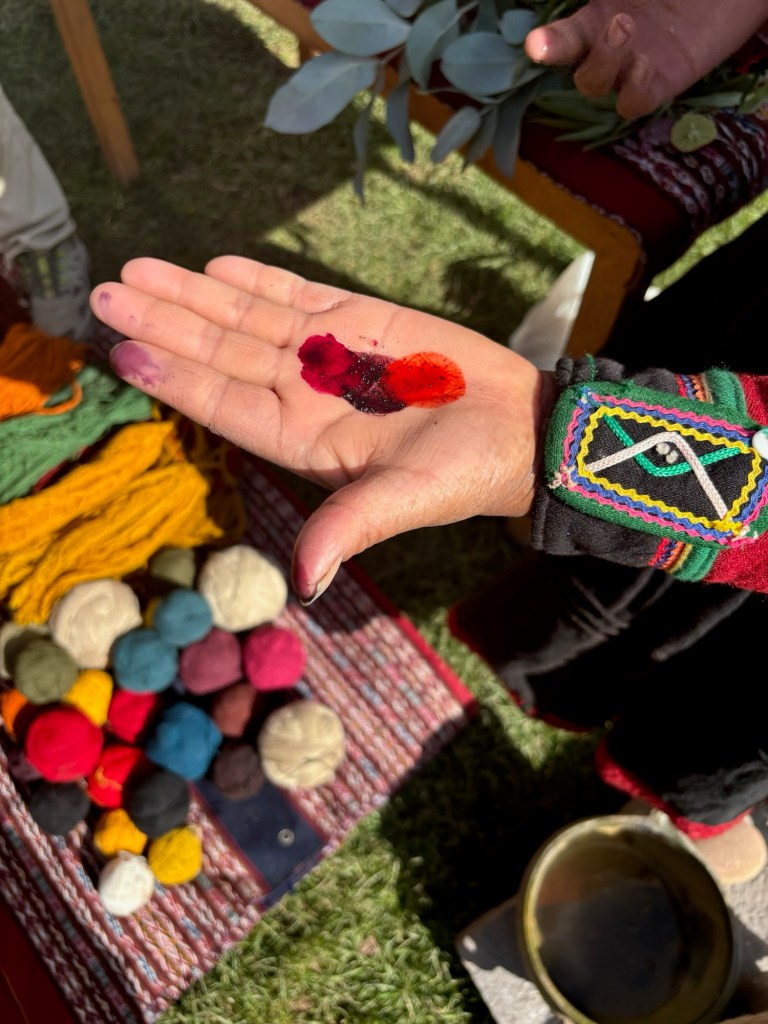
Step Four : Weaving
The fourth and final step in the process involves taking the vibrant yarn and weaving it into distinctive, one-of-a-kind pieces. This process is complex and challenging to understand, but to these talented women, it is second nature – something they have been doing since childhood. Often, each piece will incorporate Incan values and significant symbols, paying homage to Peruvian culture.
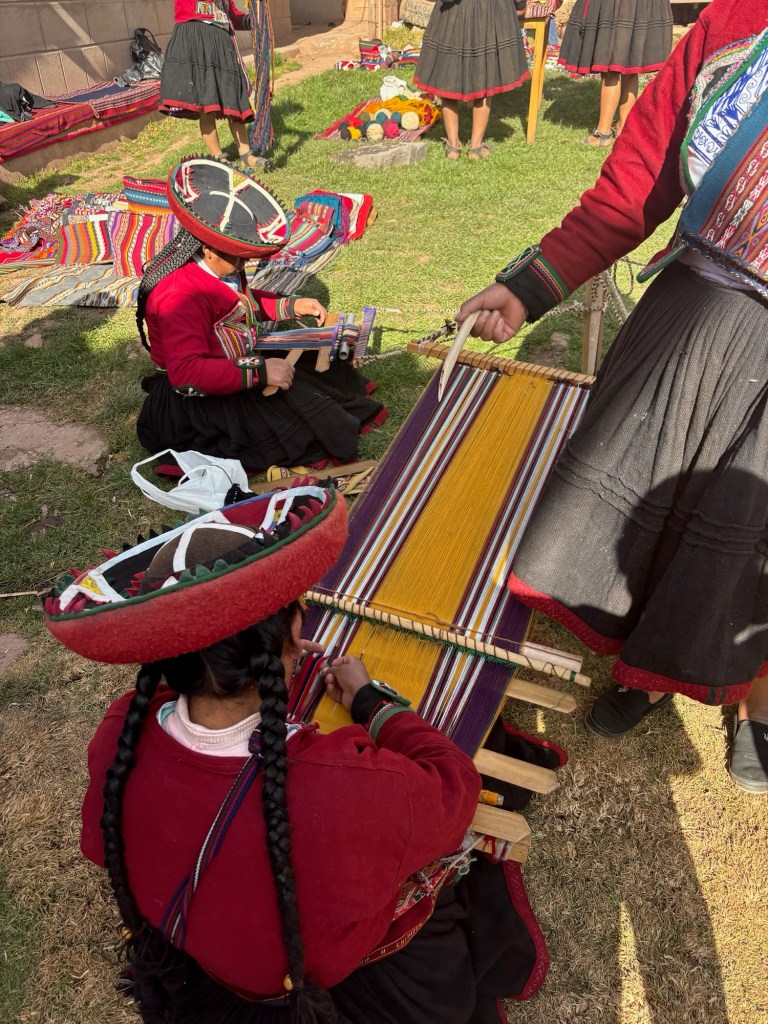
It was fascinating to learn about this local community and their art form. I knew very little about this process before my trip to Peru, and I was so excited to learn all about it from a talented group of weavers. Leaving the community, I had a new knowledge of a tradition passed through generations and unique pieces to take home with me from the Sacred Valley.


 Living in Culture
Leave a reply to Culture 4 Kids – Moorestown Library! – Living in Culture Cancel reply