Two major religions in Japan are Buddhism and Shinto. Both have their own architectural shrines/temples throughout the country that draw tourists from around the world. The religions have different philosophies, but they live in harmony all throughout the country. Additionally the different idea can be seen through the architecture. As you read, you can learn more about the differences in the religions, their monuments, and their practices.
Shinto Beliefs
Shinto is the native religion of Japan. It is focused on the worship of kami (spirits or deities) and nature. It does not have a single founder or sacred texts; instead, it emphasizes purity, harmony, and has rituals such as festivals like Matsuri. Key aspects of the religion include a deep respect for nature and the spirits that inhabit them.
There are other traditional practices associated with the religion, for example, a tour guide in Japan said told us about ceremonies like car blessing ceremonies that are performed to protect drivers. Shinto is deeply intertwined with Japanese culture. It reflects a way of life that is centered on a harmonies relationship between humans and their surroundings. It plays a role in significant life events for many in Japan, including weddings, births, and as mentioned car purchases. Many visit shrines on the first day of the New Year for blessings for the year ahead.
Shinto Shrines
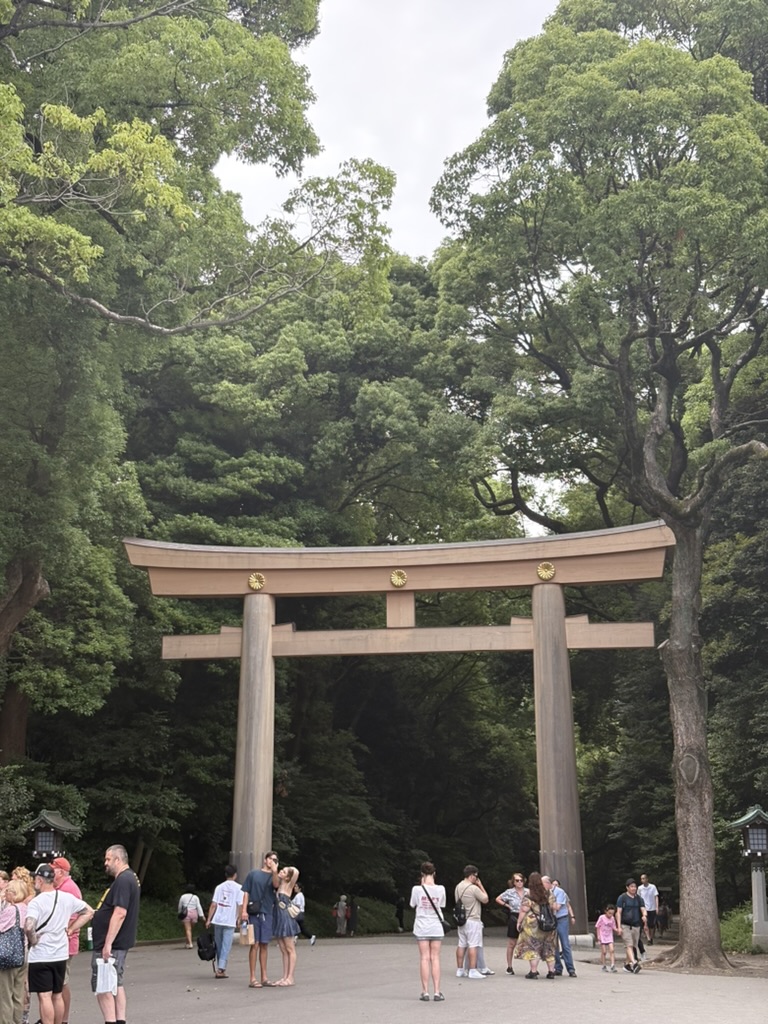
Shinto shrines are places of worship and the dwellings of the kami, Shinto gods. People visit these shrines to pray for good fortune or pay respects to the kami. Pictures above is a tori gate that at the entrance to the Shinto shrine. Once you walk past the tori gate, you will find the Purification Tough. The water in the fountains is used for purification. Visitors are supposed to clean their hands and mouth before entering the main hall. The Main Hall and Offering Hall are sometimes separated into two different buildings, but can be combined as well. The Main Hall contains the Shrine’s sacred object. Visitors make their prayers and offerings at the Offering Hall. At the Offering Hall, visitors often donate money, bow twice, clap twice, then bow once more after prayer.
The simplicity of Shinto shrines is a defining characteristic, particularly in contrast to ornate Buddhist temples. However, depending on a shrine’s history, the level of simplicity can vary.
Buddhist Beliefs
Buddhism spread from India to the rest of the world and is now a very popular religion in Japan. It originated from the teachings of Siddhartha Gautama (the Buddha) in the 6th and 5th century BCE. It focus on the concepts of suffering and how to end suffering through a path of spiritual development. Many Buddhists meditate often in their quest to reach a state of enlightenment called Nirvana. Key teachings of the religion include the Four Nobel Truths that outline what causes suffering, and the Eightfold Path that outlines the way to overcome suffering and reach Nirvana.
The tour guide told me that many people in Japan have beliefs from both Shinto and Buddhism. For example, he said that he had aspects of Buddhist practices at his wedding and involved some Shinto practices at the birth of his child. The religions are both so intertwined in Japanese culture that it is understandable that people synthesize aspects of them into their daily lives.
Buddhist Temples
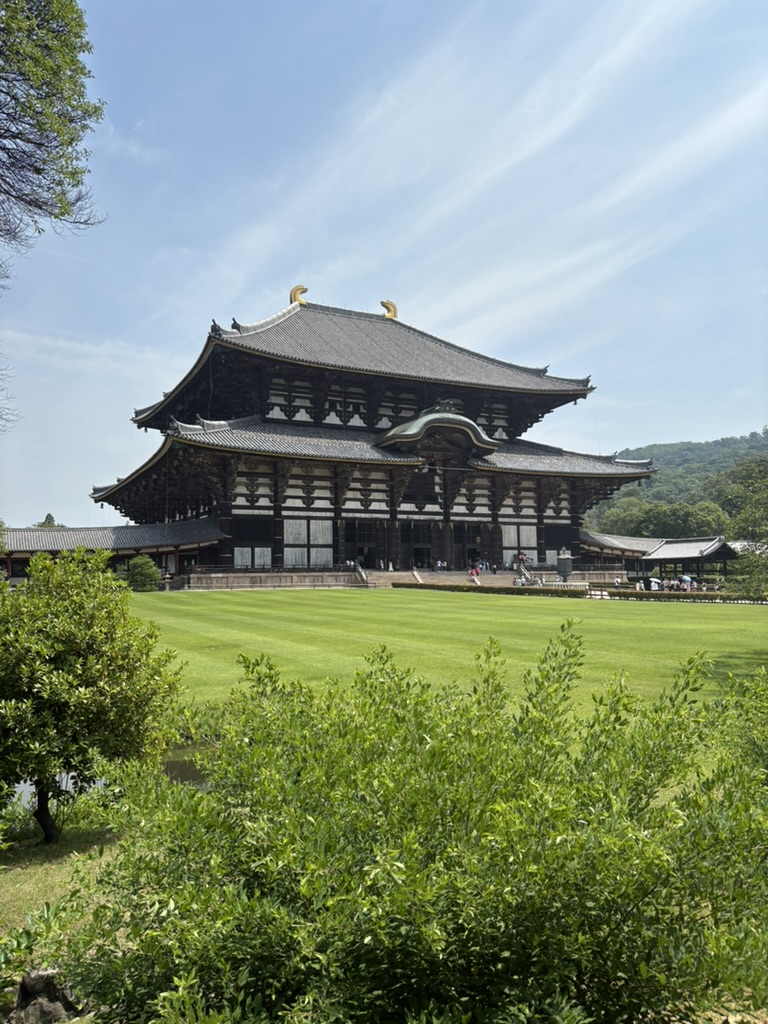
Compared to Shinto shrines, Buddhist temples are much more elaborate. Places like Kyoto have hundreds scattered throughout the city. Each is unique and beautiful in its own way. The temple complexes have many aspects including things like the Main Hall, Lecture Hall, Pagoda, and gates.
The Main hall is where the sacred object of worship is displayed. This is where most visitors enter and what many think of when they think of a Buddhist temple. Above is the Main hall of the Todai Ji Temple in Nara, Japan. There is also a Lecture hall that is used for meetings; however, it may also display objects of worship. A pagoda is often found in a Buddhist temple complex as well. This structure evolved from the Indian stupa and has three to five stories. Pagodas often store remains of the Buddha, for example a tooth, normally in the form of a representation. Finally, Buddhist temple complexes have gates that mark the entrances top temple grounds. There is usually one main gate, but there can be several additional gates as well.
Conclusion
Although Shinto and Buddhism have distinct beliefs and practices, they coexist peacefully in Japan, often blending into everyday life. Shrines and temples sometimes stand side by side, reflecting how both traditions are valued and respected. Together, they create a unique landscape throughout Japan that is not only harmonious but also deeply meaningful to visit.

 Living in Culture
Leave a comment