This summer I had the chance to travel to Japan, and it was one of the most incredible experiences I’ve ever had. I loved exploring the mix of tradition and modern life—from neon city streets to quiet shrines tucked away in the mountains. One of the highlights of my trip was seeing a Japanese tea ceremony. Even though it was shorter than the full ceremony, it gave me a glimpse into how meaningful and carefully practiced this tradition is. Every movement had a purpose, from the way the host whisked the tea to the way the utensils were placed. It felt less like simply drinking tea and more like stepping into a piece of Japanese history and culture.
Japanese tea ceremonies are more than drinking tea; it’s a spiritual and aesthetic practice. There is a unique history, cultural significance, and guidelines surrounding Japanese tea ceremonies, all of which are detailed below.
History
Tea ceremonies can be refered to as Chanoyu,“hot water for tea,” or as Sadō / Chadō, “the way of tea,” emphasizing tea as a spiritual and cultural practice. Originally, the Japanese tea ceremony developed from Zen Buddhist practices in monasteries as a way to promote mindfulness, inner peace, and discipline. The monks would drink tea to improve their focus in their long meditation. It would help them stay awake and present.
The ceremonies have not always used matcha, the powdered green tea that is used today. Loose-leaf teas were used in the medieval period. Match was brought to Japan from China in the 12th century by Zen Buddhist monks, and its preparation evolved into the Japanese tea ceremony we know today.
Today the tea ceremony continues to focus on mindfulness and appreciation of the moment (ichi-go ichi-e – “one time, one meeting”). It also emphasizes the four principles: harmony (wa), respect (kei), purity (sei), tranquility (jaku). In our tea room there was a small painting that had those words painted on it to remind everyone in the room of the principles to think about throughout the ceremony.
Procedures
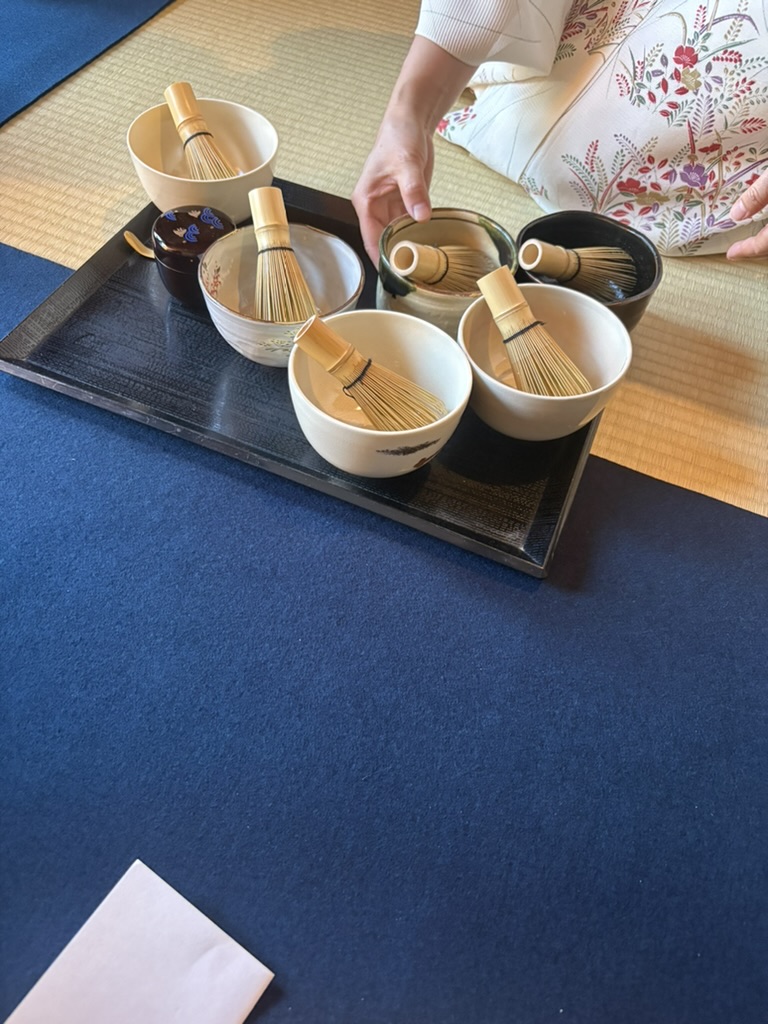
Tea ceremonies follow very specific regulations and guidelines. They are conducted in a chashitsu (tea room) with tatami mats and minimalist decor, so your mind does not get distracted. There are also specific tools used in the ceremony including: Chawan – tea bowl, Chasen – bamboo whisk, Chashaku – bamboo scoop, Natsume / Chaire – tea caddy, Fukusa – silk cloth for purification, and Kama / Chagama – kettle for hot water.
The type of tea used in the ceremony varies depending on the type of ceremony taking place. There is the more formal Chaji and the informal Chakai (the type of tea ceremony I attended). The Chaji is a full-length ceremony that can last up to four hours. It includes thick tea and thin tea. Thick tea has more matcha powder than thin tea which causes the tea to be thicker in consistency. Thin tea is used in Chakai ceremonies. Both ceremonies include food, with the longer ceremony including more. At the tea ceremony I attended, we received a sweet treat and the sweet taste left in our mouth was supposed to act as a sweetener for our tea.
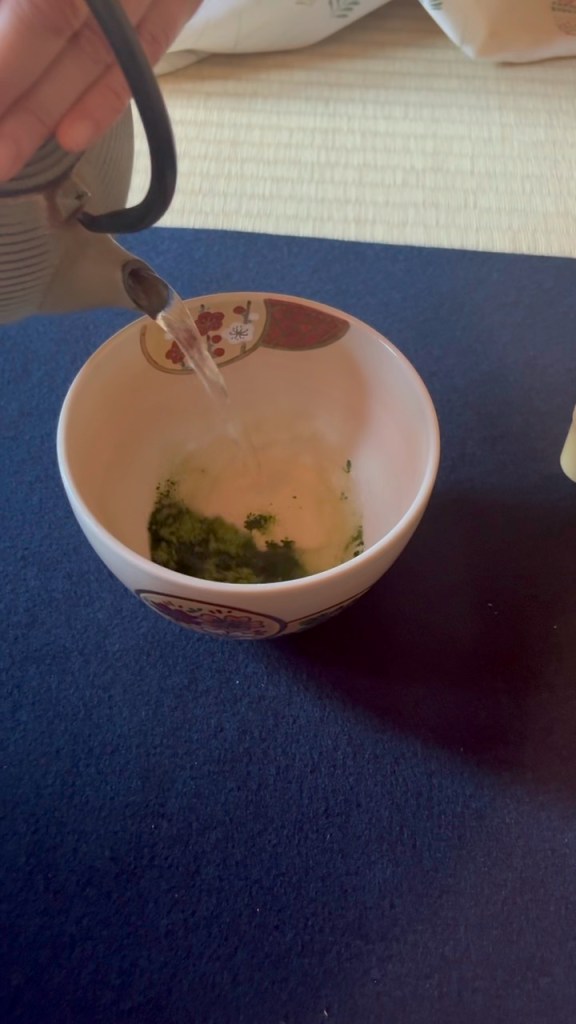
The exact steps of the ceremony vary depending on the type you are attending, but each step is practiced with careful precision. For example, the host has to purify the tools like the whisk and scoop. Our host did this in a very specific way, following a pattern of hand movements and steps. At one point, she wiped the scoop on a cloth then proceeded to fold the cloth in a specific way, following the guidelines of the tea ceremony. She also taught us the correct way to hold our bowl, receive our tea, and address those around us. I loved learning the details and specific guidelines. Everything was done with a purpose, something I found so interesting.
Cultural Significance
Tea ceremonies are a practice combining art, ritual, hospitality, and mindfulness. They have a long-standing tradition in Japan, and it is incredible to see in person. The host of our tea ceremony said she learned these procedures 30 years ago, but continues to learn and improve her technique. I found that fascinating as I did not realize there would be continued training needed. Regardless, these tea ceremonies reflect Japanese aesthetics, values of simplicity, and a deep cultural tradition.

 Living in Culture
Leave a comment