This summer, I took an incredible trip to Peru where I met so many people in the local communities and learned so much. One place that stood out to me was the Floating Islands on Lake Titicaca near Puno.
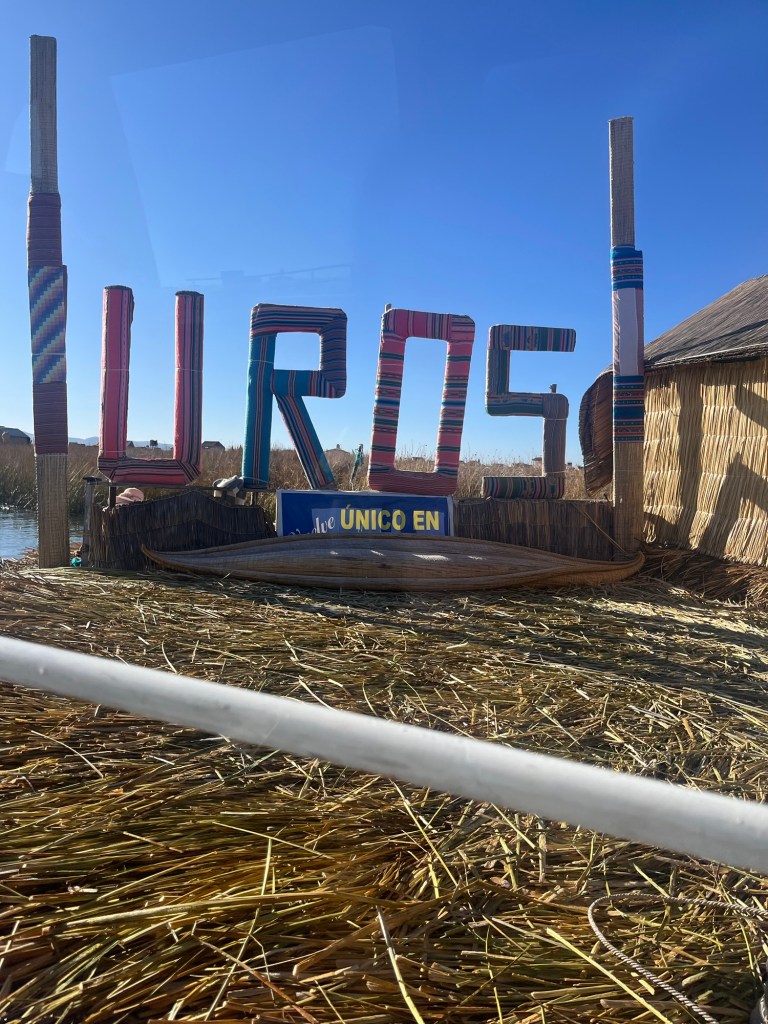
Before these Aimara-speaking communities began constructing islands for their communities, they lived on boats. Through their time on ships, the islanders became incredible fishers and today, alongside fresh reeds, ducks, and potatoes, fish makes up most of their diet. However, in the 1800s, the Uros Islanders started building their islands. Today, there are approximately 120 islands, each with a president and about four to ten families living on it, depending on its size. The Uros community is tightly knit; every week, all the island presidents convene at a designated island with a soccer field to address emerging issues. Additionally, they have established a tourism system where each island takes turns receiving visitors, with a small boat guiding larger tourist ships to the designated island of the week.
Construction
When I first saw these islands, I couldn’t help but wonder how they managed to float with houses and families living on them. Daniel, the president of the small island of Mauri, along with his wife Anna, explained the intriguing process of building these islands and offered us a glimpse into their daily lives.
Daniel detailed the initial stages of island construction, which begin with thick pieces of reed roots. These islands are strategically located just fifteen minutes by boat from Puno, surrounded by abundant fresh reeds growing in the water. Reeds play a vital role in their daily lives, serving not only as the foundation for their islands and homes but also as a source of sustenance when the outer layer of the root is peeled back for consumption. The islanders cut the roots into small blocks and intricately tie them together using pieces of wood. They then utilize the tops of the reeds to form the foundation of the island, weaving them in a sturdy crisscross pattern both horizontally and vertically.
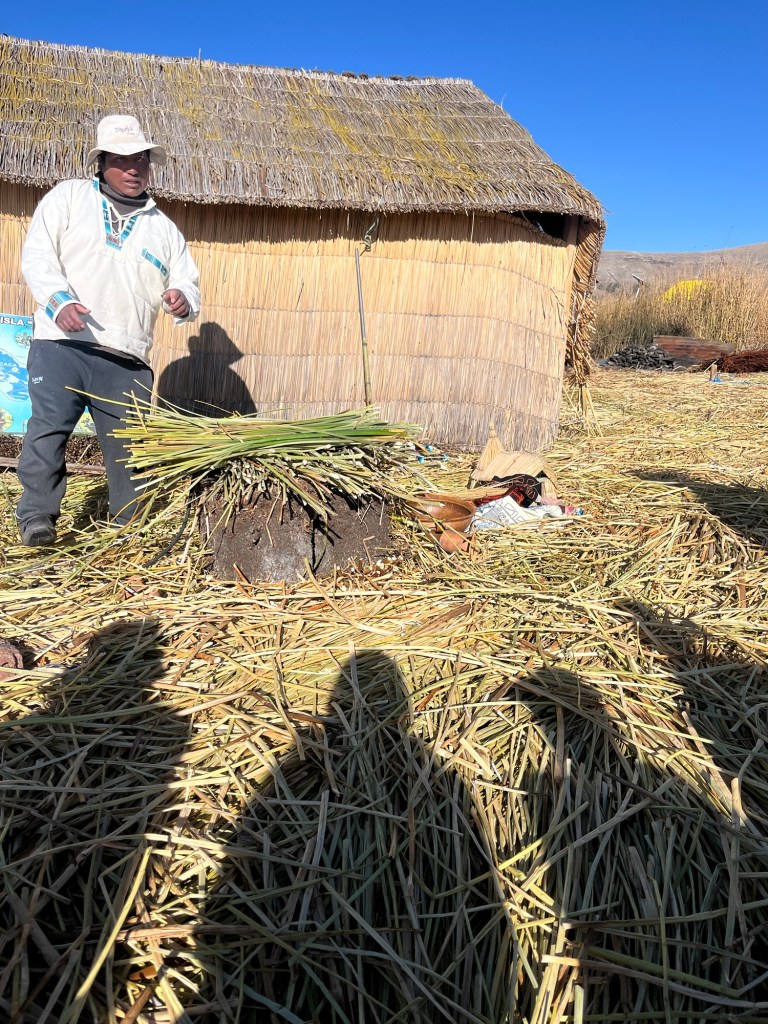
Maintaining the islands involves adding new reeds monthly during the rainy season and every three to four months in the dry season, rather than replacing any. To anchor the islands in place, each one is secured with a piece of wood connected to another island. Once the island structure is robust enough to support weight and remain stable, the islanders proceed to build their boats and homes using more reeds.
Daily Life
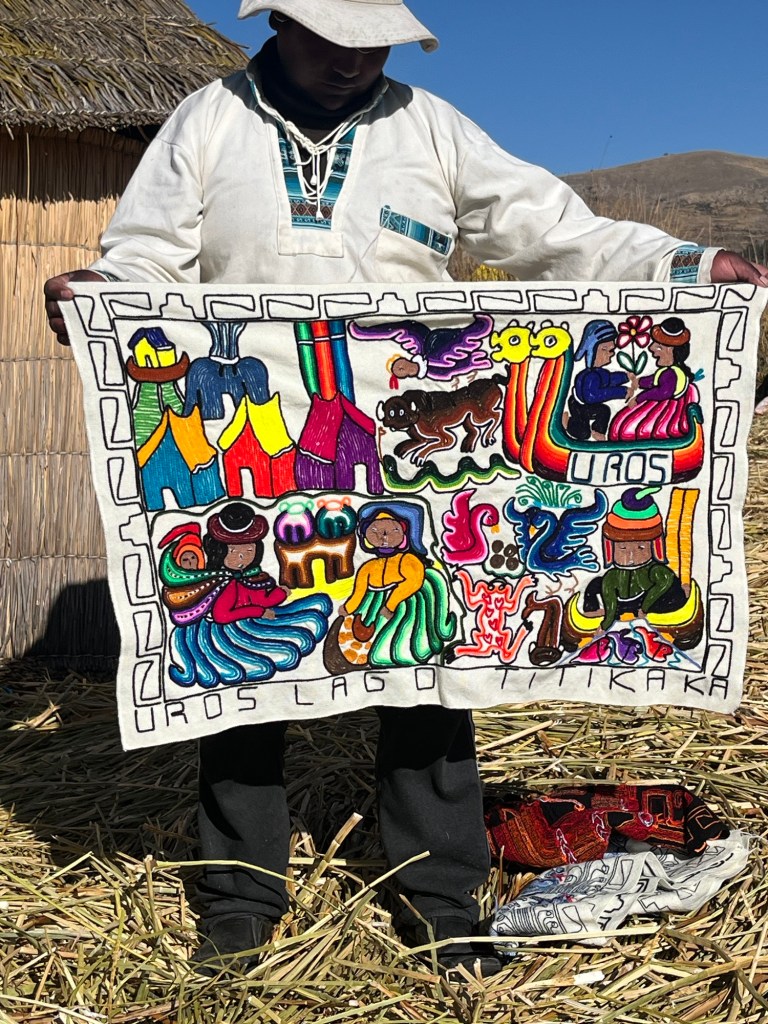
Daily life on the Uros Islands is characterized by simplicity, yet all islanders carry out their routines with cheerful spirits. Children attend elementary school on the islands and travel to Puno on the mainland for high school. Meanwhile, parents remain on the islands, engaging in fishing, demonstrations for visitors, duck hunting, and crafting exquisite handmade souvenirs for tourists. They also make regular trips to the mainland to trade goods and purchase essentials like fabrics and potatoes.
Life on the islands is different than our normal routines, but there are still some similarities. Some of the homes on the island have electricity through solar power that powers things like TVs and radios.
The islanders are so happy and excited to teach others about their lifestyle. I am so happy I got to meet this wonderful community, and it was such a unique experience. I had never heard about these islands, but this visit was one of my favorite parts of the trip.

 Living in Culture
Leave a comment